
5052 VS 5154 Aluminum Strip For Cable Armouring
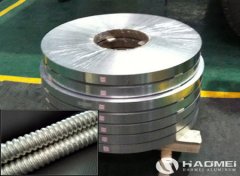
Both 5052 and 5154 aluminum strips belong to the Al-Mg (aluminum-magnesium) alloy series and are suitable for use as cable armoring. They offer excellent corrosion resistance, strength, and formability, allowing them to be applied—typically via helical overlapping—to create a protective metal layer that enhances a cable's resistance to crushing, impact, abrasion, and installation-related damage
Material selection should not be based solely on the alloy grade. Factors such as the material's temper (condition), thickness, width, tensile strength, elongation, edge quality, and the specific parameters of the wrapping equipment all influence the actual performance of the armored layer.
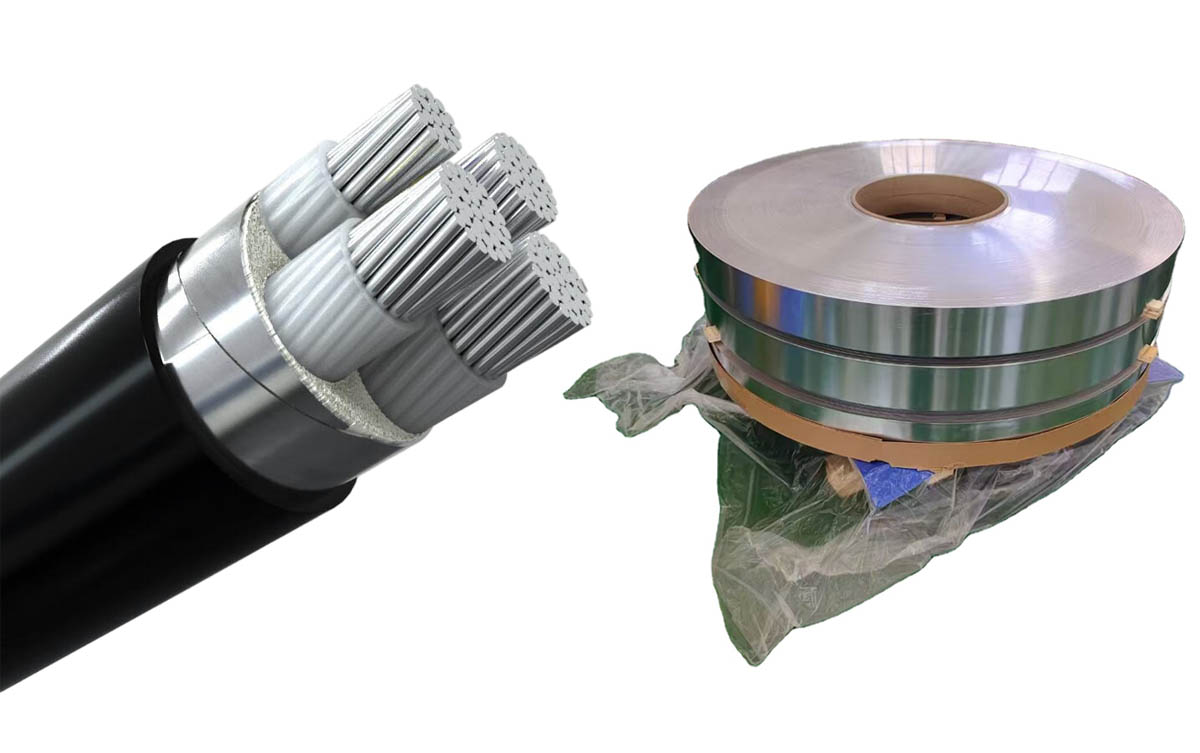
Differences in Chemical Composition
The primary alloying element in 5052 is magnesium, typically present at 2.2%–2.8%, along with a small amount of chromium. 5154 contains a higher magnesium content—generally 3.1%–3.9%—as well as manganese and chromium. Because element limits can vary depending on the standard, please refer to ASTM B209, EN 573, GB/T 3190, or the specific technical agreement between the parties.The higher magnesium content gives 5154 aluminum strip the potential for greater strength, though it also necessitates precise control over the rolling, annealing, and wrapping processes.
Mechanical Properties and Armoring
For a given thickness and similar temper, 5154 aluminum strip typically offers higher tensile and yield strength than 5052. Consequently, 5154 is often preferred for cable designs requiring greater rigidity and enhanced resistance to external mechanical forces—such as cables with larger outer diameters or industrial cables that demand a higher level of mechanical protection.5052 provides a favorable balance between strength and ductility, ensuring stable forming during the helical wrapping process; it is commonly used for the armoring of standard power and control cables. 5052 is a frequent choice in production scenarios involving tight bending radii, fluctuations in wrapping tension, or a need to minimize the risk of edge cracking.
Actual mechanical properties are directly dependent on the material's temper. For instance, there are significant differences in strength and elongation between tempers such as H22, H24, H26, and H32; therefore, the alloy grade alone cannot serve as a substitute for specific performance metrics.
Corrosion Resistance
Both 5052 and 5154 exhibit good atmospheric corrosion resistance, making them suitable for use in humid environments, general industrial settings, and outdoor cable applications. When combined with an intact outer sheath, proper fillers, and effective sealing, aluminum strip for cable armouring enhance the operational reliability of cables in standard environments.In environments characterized by high salt-spray exposure, prolonged immersion in water, the presence of strong acids or alkalis, or contact with dissimilar metals, the design must be approached systematically—accounting for the chemical resistance of the sheath, end-sealing methods, galvanic corrosion control, and project-specific standards. The aluminum strip alone does not determine the long-term corrosion protection rating of a cable.
Processing Performance (Helical Wrapping)
Cable armor aluminum strips are sensitive to factors such as edge burrs, lateral curvature ("camber"), thickness variations, strip flatness, surface oil contamination, and coil splices. 5052 generally offers excellent cold-working and bending characteristics, making it well-suited for high-speed, continuous helical wrapping. Given its higher strength potential, 5154 requires careful selection of temper and elongation to prevent cracking or fracturing—particularly during wrapping around small diameters, or at points of compression or overlap. Commonly used armor tapes have a thickness of approximately 0.20–0.50 mm; their width is determined based on the cable's outer diameter, the required overlap ratio, and the specific design of the application equipment. It is recommended to conduct a trial wrapping process before finalizing the specifications for bulk procurement.Selection Reference for 5052 and 5154 Aluminum Strips For Cable Armouring
| Comparison Criteria | 5052 Aluminum Strip | 5154 Aluminum Strip |
| Alloy System | Al-Mg | Al-Mg |
| Typical Mg Content | Approx. 2.2%–2.8% | Approx. 3.1%–3.9% |
| Strength Potential | Moderate | Generally higher |
| Formability & Wrapping | Good; highly adaptable | Good; requires appropriate temper matching |
| Atmospheric Corrosion Resistance | Good | Good |
| Typical Applications | Standard armored cables | Armored structures requiring higher mechanical protection |
Final material selection should be based on the complete cable design, applicable standards, type testing, and specific customer requirements.
Haomei Aluminum offers 5052, 5154, and 5154A aluminum strips for cable armoring. We are available to discuss technical specifications, including thickness, width, temper, mechanical properties, edge quality, coil weight, and export packaging requirements.
Related News
- 5052 VS 5154 Aluminum Strip For Cable Armouring
- Aluminum Strip for Heat Exchanger Fins With Blue Coating
- Cable Wrapping Aluminum Foil
- 5154A H22 Aluminum Strip For Cable Armoring
- Transformer Aluminum Strip Price Per Ton
- 3003 H19 Aluminum Strip For Insulating Glass Spacer Bar
- What Is Aluminum Strip With Round Edges?
- Burr Free Aluminium Strip For Transformer Winding
- 1060 Aluminum Strip for Electric Cable Armouring
- Aluminum Fin Stock Strip For Heat Exchanger
